From Backyard Barbecues to Road Construction: Finding Buyers Where Competitors Weren't Looking
Sometimes the strongest way to find a customer is to understand what they're doing before they start shopping for your product.
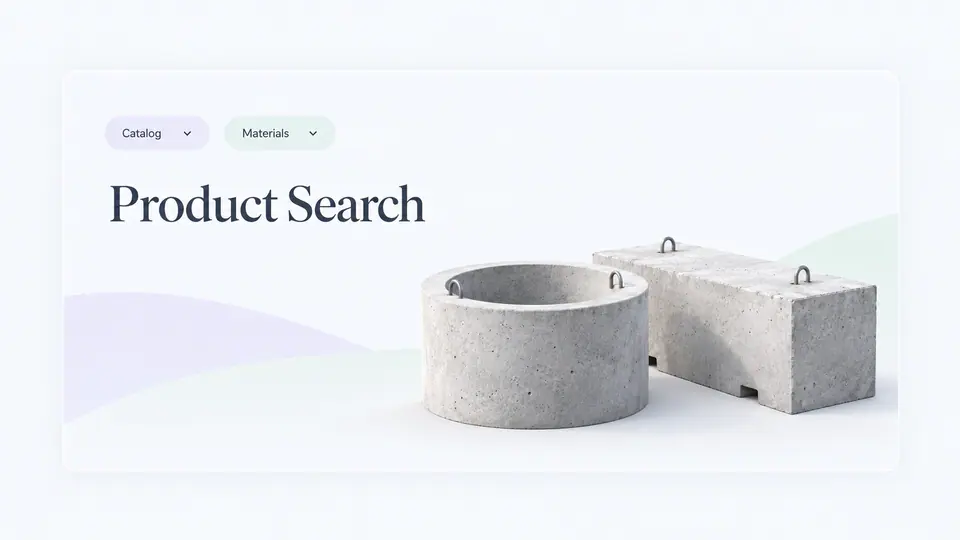
We worked with a manufacturer of concrete products: foundation blocks, paving elements, well rings, curbs, and other precast components. These aren't the kinds of products people normally associate with creative advertising. You might expect every campaign to revolve around concrete, dimensions, and prices.
Those direct searches mattered, of course. But two of the most memorable opportunities came from phrases that didn't describe the company's products at all: barbecue and asphalt procurement.
A surprising path to homeowners
In the Russian market where this project took place, many people who own a plot of land or a country house also spend time searching for outdoor cooking, gardening, and weekend activities. We explored those neighboring interests as a possible way to reach people who might later need building materials.
One of our experiments involved barbecue-related themes. Someone looking up a meal wasn't necessarily shopping for well rings or foundation blocks. But a portion of that audience had the kind of property where those products made sense.
We used contextual advertising rather than putting the word "barbecue" in a concrete product headline. In fact, the placements through Yandex's advertising network worked better for this idea than direct search placements, which were understandably less relevant.
There was noise in the audience. Not every visitor was a potential buyer. The economic question was whether the orders justified the spend, not whether every click perfectly matched a concrete product name.
For this project, the broader approach produced useful customers alongside the direct product campaigns. It wasn't a formula we would recommend copying literally into another country or industry. It was an example of thinking about the buyer's situation, not just the buyer's final shopping query.

A completely different buyer was searching for asphalt
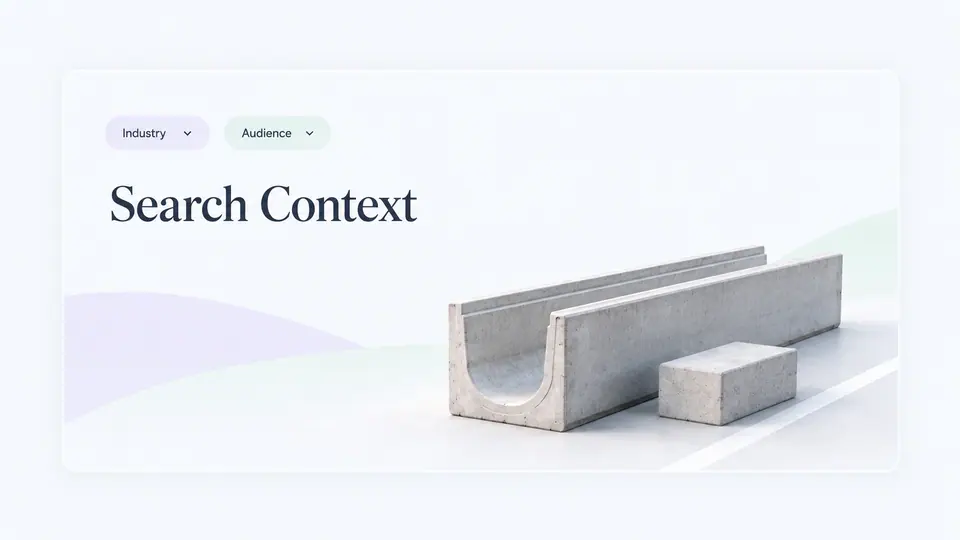
The same manufacturer had a road-edge concrete drainage component used beside paved roads to channel water. The product had been marketed largely to private buyers, but we saw that it could also be relevant to road construction contractors.
We asked how road teams might research materials and projects. That led us toward terms around asphalt and procurement—not because the factory sold asphalt, but because the organizations buying asphalt might also need related roadside components.
One contractor working on a major route between the Samara and Saratov regions found the manufacturer through an asphalt-related query. The business received a substantial order for concrete roadside components that it was capable of producing in volume.
The distance surprised us. These pieces weren't being ordered from the nearest possible source; the supplier's ability to fulfill a large requirement mattered.
We hadn't changed what the company manufactured. We had changed which potential buyers could discover it.

The website had to support the promise
At the same time, we replaced an awkward older site, improved the product search, took new photographs ourselves, and redesigned product pages. Visitors could find relevant items more easily and see credible product imagery instead of outdated pictures.
That mattered because an unusual advertising entry point only gets someone to the website. The website still has to demonstrate that the business is a serious supplier.
We saw improved search traffic, engagement, and conversion metrics after the broader website and marketing work. We can't assign all of that improvement to any single element.
Context is not the same as irrelevance
On paper, barbecue and asphalt procurement look unrelated to concrete rings or curbs. In the real world, the people and organizations behind those searches have overlapping needs.
This approach has limits. A campaign must still respect advertising policies, targeting options, user expectations, and actual profitability. It should never misrepresent what the company sells.
But there's a useful principle here: research the customer's activity, project, and situation, not only the exact name of your product.
That is often where a manufacturer with strong capacity—but underdeveloped marketing—can find opportunities others have overlooked.